
There are days when Ijebu-Ode feels ordinary – and then there is Ojude Oba. On this day, the town changes completely.
Streets that usually carry everyday movement become filled with colour, rhythm, tradition, and returning sons and daughters who arrive from across Nigeria and the diaspora.
The air itself feels different — alive with drumbeats, horse hooves, cheers, and the energy of a people reconnecting with their roots.
Ojude Oba is not just a festival. It is a living expression of identity, memory, and belonging.
Held annually a few days after Eid al-Kabir, it is one of the largest cultural gatherings in Yorubaland, drawing hundreds of thousands of people including politicians, business leaders, celebrities, and members of the Ijebu diaspora.
But beyond the crowd and celebration lies something deeper — a system of culture that has survived generations.
At the centre is the Awujale’s palace forecourt, the symbolic space where authority, tradition, and community meet. For centuries, it has represented the heart of Ijebu identity — where homage is paid, unity is displayed, and continuity is affirmed.
READ ALSO: Delta Govt Reacts To Video Of Assaults On Women At Ozoro Festival
READ ALSO: 5 Imo Clans Where Strangers Can’t Walk Alone This Season
Following the passing of Oba Sikiru Kayode Adetona in 2025, the 2026 edition unfolds in a rare moment without a seated monarch, giving the festival an unusual emotional weight. Yet the absence does not weaken the tradition; instead, it reveals how deeply rooted it already is in the people themselves.
One of the most important cultural structures in Ojude Oba is the regberegbe system — age-grade groups that define social belonging in Ijebuland.
These groups are not symbolic alone; they are active social institutions. Members support community development, contribute to public projects, and maintain lifelong bonds based on shared generation and identity.
 In the festival, they become visible. Each group enters in coordinated attire, designed not just for beauty but for meaning — unity, discipline, and pride. Their parade reflects a cultural truth: in Ijebuland, identity is collective, not individual.
The festival also reinforces respect for leadership and ancestral continuity. Even without a seated Awujale, the palace remains a sacred centre, and the gathering itself becomes an act of cultural preservation — a reminder that leadership in Yoruba tradition is not only political, but deeply spiritual and communal.
Then comes one of the most powerful cultural expressions of the festival — the horse parade.
The Balogun families, descendants of historical war leaders, ride into the arena on horseback. Their presence connects the present to the past, recalling a time when these families represented military strength and protection of the kingdom.
Today, that history is not forgotten; it is reimagined through performance.
The horses themselves carry deep cultural symbolism.
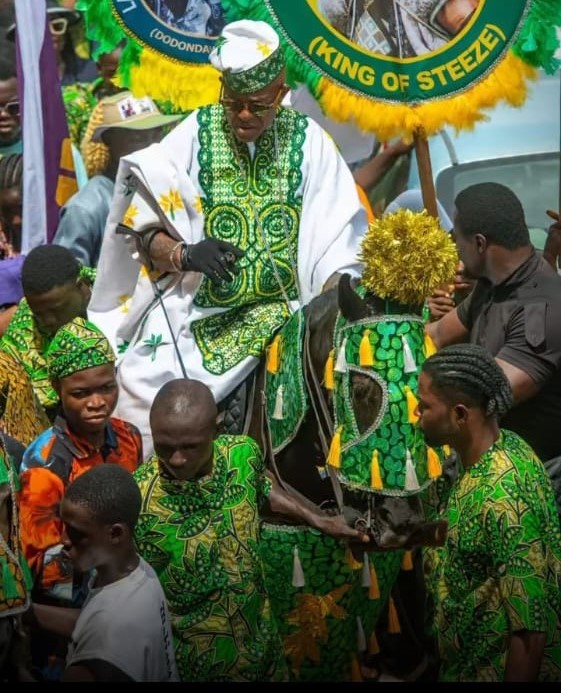
Before entering the arena, they are transformed with layers of fabric, beads, embroidery, and ornaments. These decorations are not random. They reflect Yoruba artistic tradition, where colour, texture, and design communicate status, pride, and identity. Each horse becomes a moving artwork — a living expression of craftsmanship passed through generations.
As they step forward, the arena changes energy. Drums intensify. The crowd reacts. Movement slows. In that moment, culture becomes visible — not as history in books, but as something alive, walking in front of everyone.
Beyond the spectacle, Ojude Oba also carries spiritual and communal meaning. It is a moment of return — of people coming back home, reconnecting with family, and reaffirming belonging. Prayers are offered for peace, stability, and the progress of Ijebuland, grounding the celebration in reflection as much as joy. From OjudeOba.com, credit Abdulfatai Olawale Fahm.
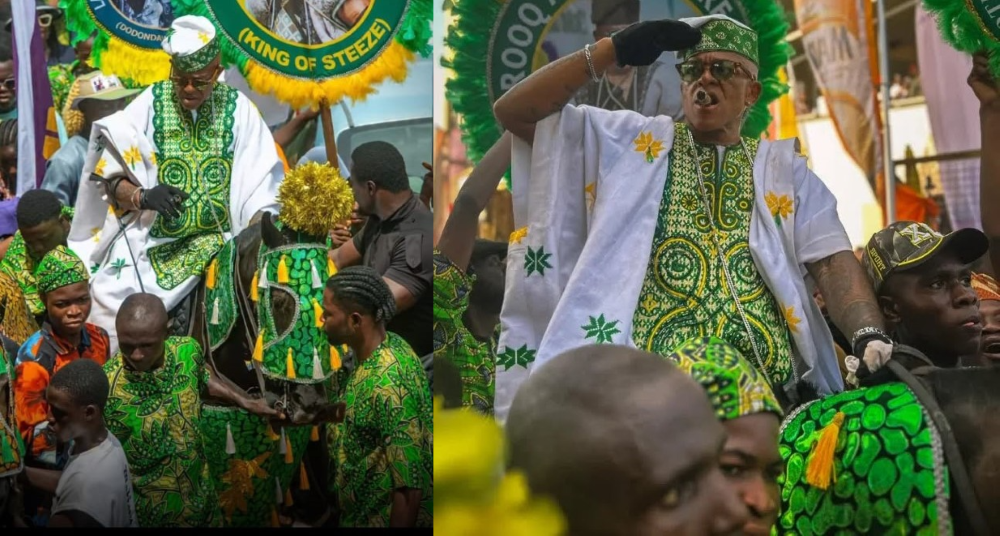
In recent years, the festival has also entered digital culture. At the 2026 edition, businessman Farooq Oreagba, popularly known as the “King of Steeze,” drew attention for his horseback entrance, which quickly circulated online. His composed presence, alongside his son, who also rode into the arena, became a modern reflection of continuity — a visual link between generations in a changing world.
But beyond viral moments, the deeper meaning remains unchanged.
Ojude Oba is a system of culture in motion. It is how people remember themselves without needing to say it aloud.
As the day ends and the crowd slowly disperses, what remains is not just memory of performance, but something more lasting — a sense of identity carried quietly back into everyday life.
Ojude Oba is not simply an event.
It is how Ijebuland continues to see itself.
