
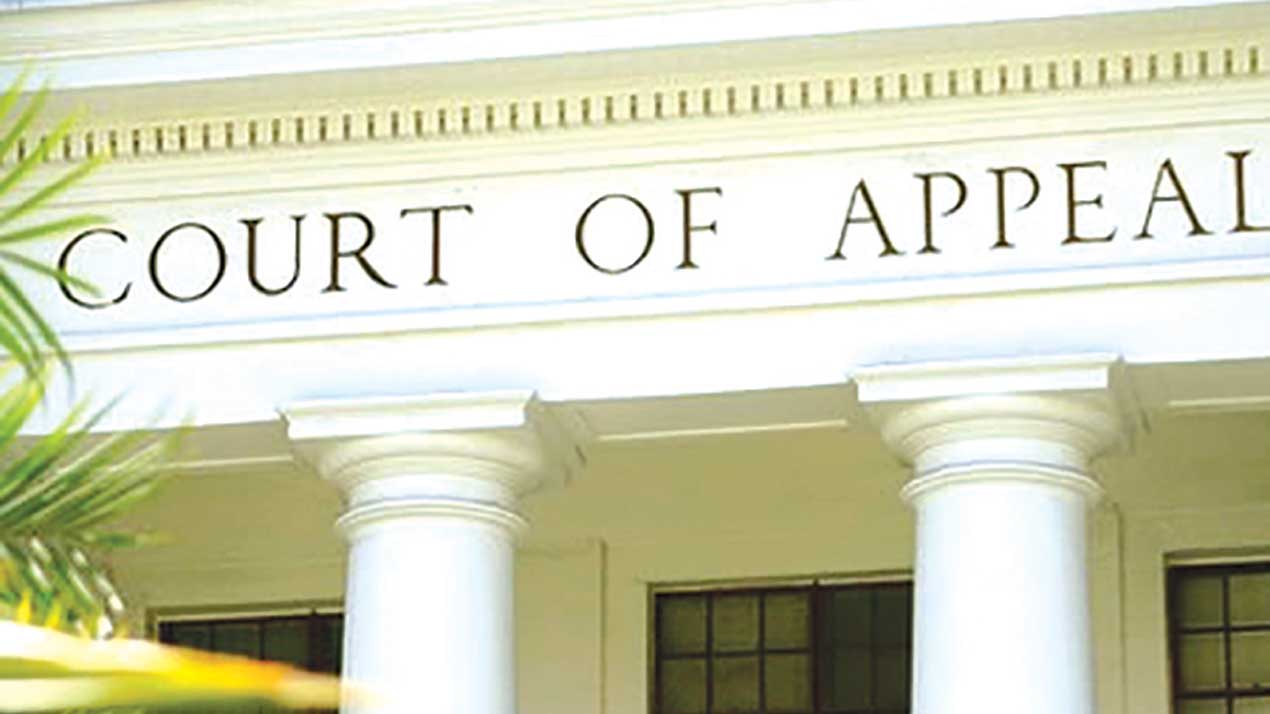
The Abuja Division of the Appeal Court, on Tuesday, lambasted Justice Peter Lifu of the Federal High Court, Abuja.
This has to do with the judgement delivered on Monday, which ordered the Independent National Electoral Commission (INEC) to deregister five political parties.
However, the Appeal Court has today, said Justice Lifu exhibited judicial rascality by going ahead to hear and made the order despite the order of the Court of Appeal and the pendency of the matter before the court.
The court ordered a stay of the execution of the Federal High Court judgement.
IT said the parties did not meet the Constitutional threshold of Section 225 of the 1999 Constitution (as amended).
READ ALSO: 20-Year Jail Term: Falana Warns Governors Negotiating With Terrorists
Section 225 of the 1999 Constitution gives INEC the power to deregister political parties that failed to meet the constitutional threshold.
INEC had approached the Court of Appeal in Abuja, seeking a stay of execution of a judgement that ordered the deregistration of the ADC and four other political parties.
INEC, dissatisfied with the ruling, moved to challenge the decision at the appellate court and sought an order suspending the enforcement of the judgement pending the determination of its appeal.
Recall our story yesterday, of an order of the Federal High Court in Abuja to the Independent National Electoral Commission (INEC) to deregister some political parties.
The court followed a judgment delivered by Justice Peter Lifu, on a suit filed the National Forum of Former Legislators.
In the suit marked FHC/ABJ/CS/2637/2026, National Forum of Former Legislators had alleged that five political parties thus: African Democratic Congress (ADC), Action Peoples Party (APP), Action Alliance (AA), Accord Party (AP), and Zenith Labour Party (ZLP) had failed to meet the constitutional benchmarks required to retain their registration.
According to them, the electoral performance thresholds in reference are as set out in Section 225A of the 1999 Constitution (as amended), as well as the Electoral Act 2022.
According to the litigants, the aforementioned parties do not qualify to run in the 2027 general elections havin:
- performed poorly in both the 2023 general elections
- performed poorly in the by-elections conducted by INEC,
- Failed to win seats at the local government, state and national levels.
The litigants thus urged the court to rule in their favour, and direct INEC to deregister the parties.
They are also asking that they should not be allowed to participate in other activities building up to the election proper, based on their arguments.
With the Appeal Court ruling on the matter, it is not yet clear the next move of the other parties in the matter.
However, there is every likelihood that many more twists impend on not just this particular matter, but many other contentious electoral issues as 2027 draws closer.
