
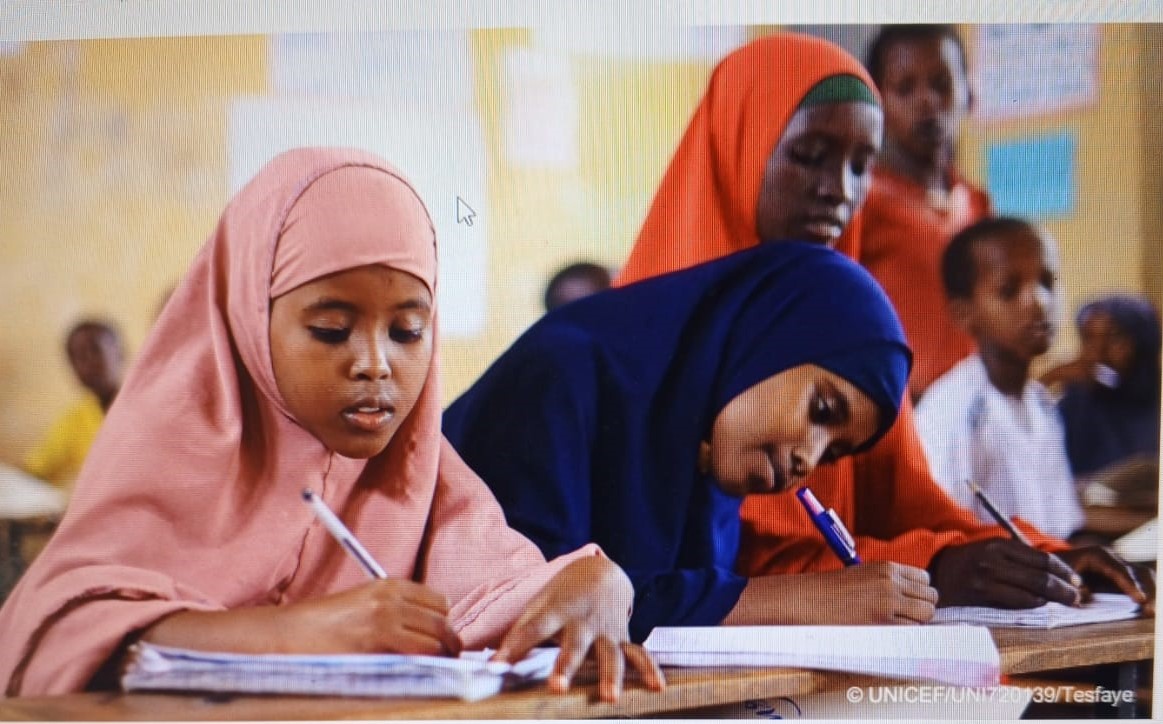
It can only be a peculiar education crisis, to have roughly 7.2 million of children out of school, and over 9,000 schools damaged by conflict or natural disasters?
But that is just a perspective of the socio-economic challenge that currently stares the nation in the face.
Violence, climate shocks and displacement have driven high rates of out-of-school children and youth
One of the main drivers of the country’s peculiar education crisis has been conflict, which has spread across multiple regions and accounts for around 70% of all out-of-school children.4 Insecurity and violence have led to school closures and deterred school attendance.
In 2023 and 2024, 32 attacks against schools were verified by the UN, as well as eight instances of schools used by armed actors.
Conflict has also severely affected teachers. For example, in September 2025, a teacher in Bule Hora was stripped and assaulted over alleged political affiliations, and two teachers were killed in East Gojam in 2024.
Climate change and natural disasters are another cause of learning disruption. Ethiopia ranks “extremely high” on the Child Climate Risk Index, a ranking of countries based on children’s exposure and vulnerability to the impacts of climate change.
In 2024, more than 1.2 million children in Ethiopia were affected by climate-related school disruptions, drought being the leading cause.
That same year, in the Somali region, at least five schools with over 1,200 students were forced to close due to drought induced displacement, and 33 others were also at risk of closing due to severe water shortages.
READ ALSO: Girls Now Far Ahead Of Boys In Education -World Bank Experts
READ ALSO: The Untold Story Of How 13-Yr-Old Ochanya Died While Seeking Education
In the Afar region, water shortages resulted in 4,400 children not attending school1 Other hazards also threaten education: in late 2024 and early 2025, aseries of earthquakes struck three regions, damaging 50 schools and disrupting education for nearly 7,000 children.
Displacement, whether induced by conflict or climate, is another obstacle to children and youth’s education. In 2024, around 2.3 million people were internally displaced in Ethiopia.
In a survey from the same year, about a third of assessed sites reported that only a few internally displaced children in the site had attended school in the last academic year, another third reported that about half of children had attended school, and 5.1% of sites reported that no internally displaced children had attended primary school during the last academic year.
Top barriers to accessing education cited included limited or lack of school supplies, education costs, distance to school, and the need to work.
Education to refugee children presents yet another challenge: Ethiopia is one of the largest refugee hosting countries in Africa, home to over one million refugees and asylum seekers mainly from Eritrea, Somalia, Sudan and South Sudan, more than half of which are children.
While policies are improving to integrate refugees into the national education system, resource constraints and other systemic implementation hurdles, including limited school capacity, still impact refugee children and youth’s access to quality education.
Girls face gender-specific barriers to education. Despite progress in recent years, child marriage still constitutes a particular issue, with parents reporting marriage as one of the main reasons for girls dropping out of school. Children and youth with disabilities also struggle in accessing education. According to latest available estimates, the gross enrollment rate of students with special educational needs in primary and middle schools was only 11.8%.
READ ALSO: Igwe Omor Moves To End Early Marriage, Celebrates 2022 Ofala Festival
READ ALSO: Meeting A Canadian Woman For Marriage To Migrate To Canada
Why this peculiar education crisis is considered neglected
The Norwegian Refugee Council (NRC) ranks Ethiopia as the second most neglected displacement crisis globally in 2024, noting that media coverage of the crisis was negligible and that political engagement was limited and ineffective.
As of December 2025, only 27% of the USD 98 million required by the UN-led education response had been funded, according to internal analysis by the Global Education Cluster. This severely limits the sector’s capacity to address the barriers to learning, including conflict-related insecurity, the exclusion of displaced children and girls, and the escalating impacts of climate shocks.
Adapted from “Country brief: Ethiopia’s education crisis”, published in Geneva Global Hub For Education In Emergencies

Cami Ezenwa is a Writer, Editor, Publicist, Biographer and Journalism Trainer
He has worked with the Daily Times, Daily Independent, Financial Standard and Business Television to mention some.
His ongoing Corporate Communications Master Class training series equips learners with credible hands-on skills for effective Media Relations, Public Communications & Corporate Affairs amongst others.
He can be contacted via 09165809519 or 08180335778.