
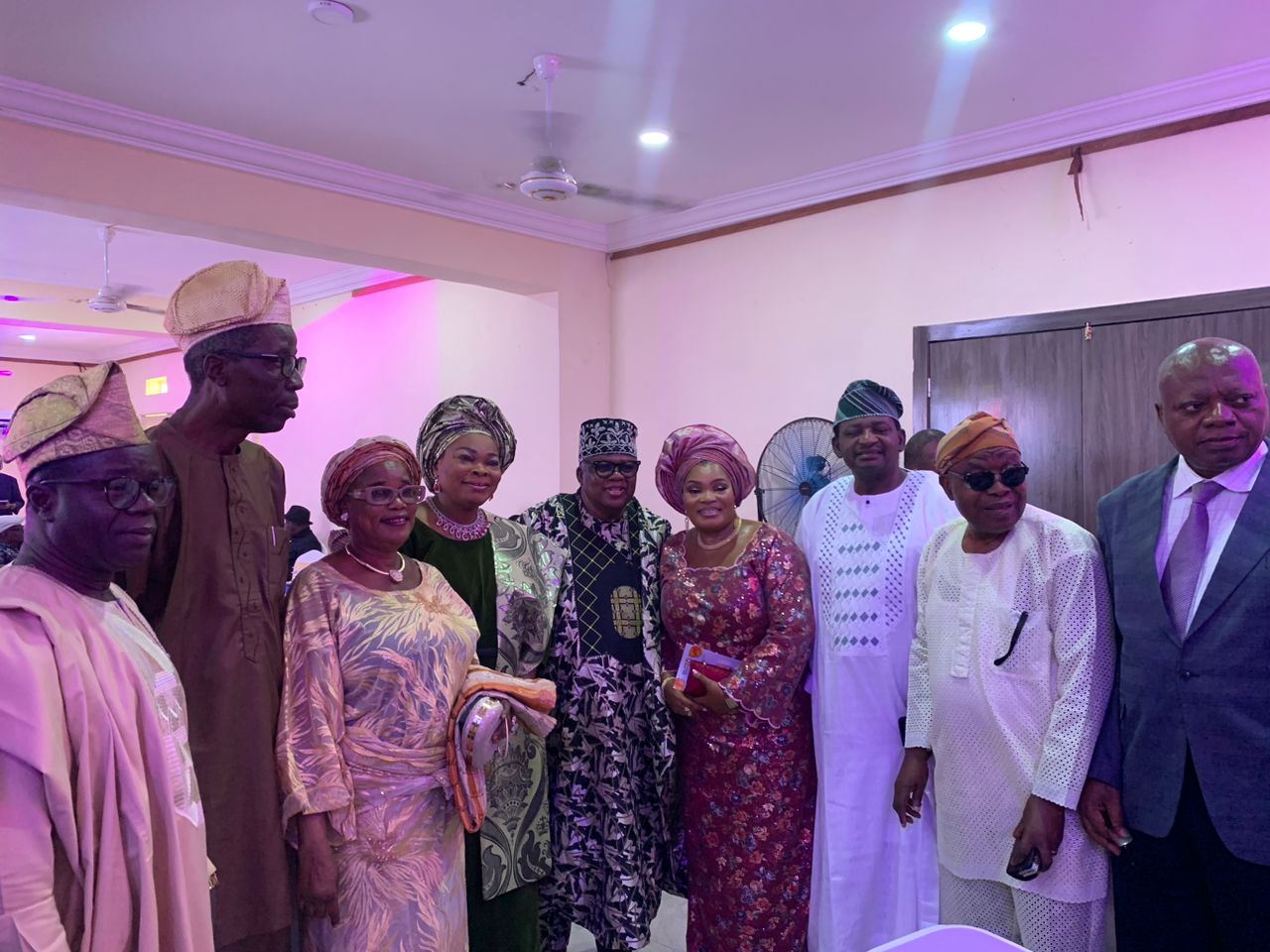
Nothing intoxicates me, not money, not influence, were part of the declarations of veteran Nigerian journalist, Shola Oshunkeye, who celebrated a 70th birthday amidst a colloquium/book lunch yesterday.
The Nigerian institute of Journalism (NIJ) venue of the event was a beehive as friends, colleagues and family turned out in their number to felicitate with him.
“For me, byline is everything – more than having my name on a news story. It is fulfilling to me
The event ran under the theme “The Decline of Human Interest Journalism in Nigeria” and provided opportunity for the journalist to initiate a lasting legacy beyond celebration:
“This year that my 70th looms, I said I must do something beyond just having a party, eating, and dancing. It should not end like that; that there should be a legacy project, and that is why I chose Byline & Backbone: A Lifetime of Big and Impactful Stories.”
The emphasis on byline, he explained, dates back to the moment his first story was published in 1989.
“When I got my first byline in 1989, I bought many copies and took them to the office to share with my friends and colleagues, showing them that yes, I had written an article. It was so exciting,” Oshunkeye said.
That early experience, he noted, shaped his lifelong attachment to the byline, which he now regards as the ultimate reward in journalism—far beyond money or influence.
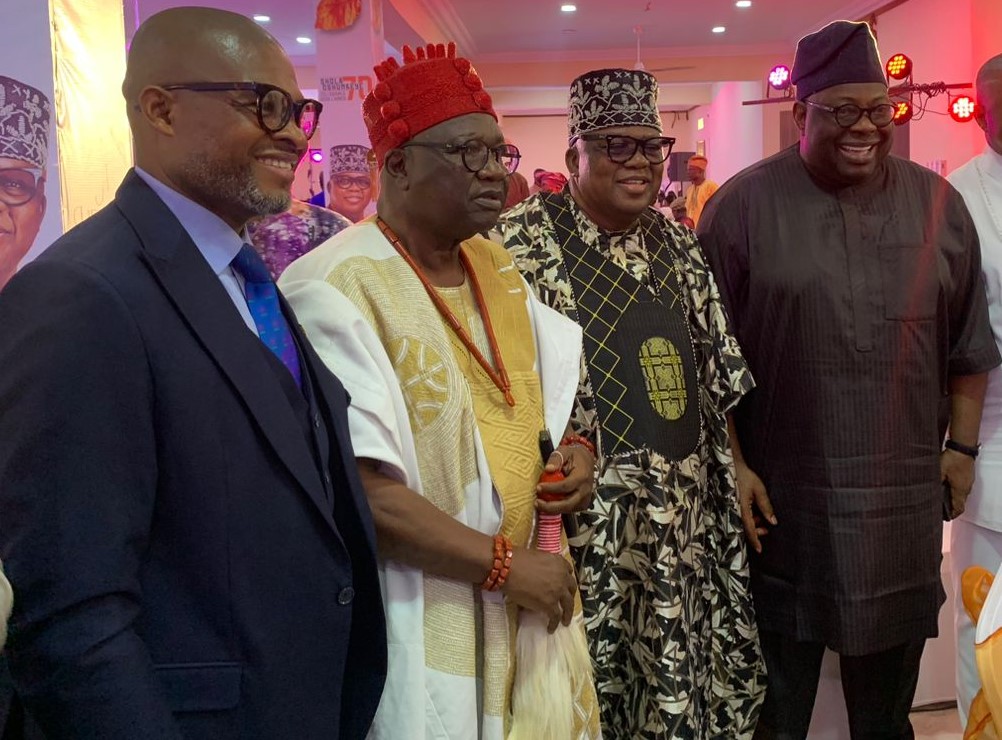
from left, Azu Arinze, Oba Clement Adesuyi Haastrup, the celebrant and Dele Momodu
Explaining the “backbone” aspect of his book, Oshunkeye stressed the importance of family support in a journalist’s life, noting that the demands of the profession often take them away from home. He remarked that a journalist cannot go to their beat without the understanding and support of their spouse.
He was full of appreciation for his family, especially his wife, whom he said had been standing by him throughout his career:
“My children are wonderful. They have endured not having their daddy around, yet with this woman—solid behind me and beside me—she raised them to be successful.”
He noted that this support system formed the backbone of his journey, enabling him to pursue impactful stories while maintaining a stable home.
Further explaining the “backbone” concept, Oshunkeye likened it to the spinal cord, which he described as the body’s support system. He used this to illustrate what he calls the power of conviction in journalism.
READ ALSO: Seminar Unveils Journalism And Content Creation Insights
READ ALSO: Concerned Nigerian Issues Harsh Words On “Obidients” On Social Media
“Without the spinal cord, the body cannot stand. But it goes beyond that. The spine, in this case, is your power of conviction. The power of conviction drives you. No story ends—you keep digging and digging. You must have patience, perseverance, and endurance to be able to do journalism,” he said.
He emphasised that beyond talent or recognition, it is this inner strength—conviction, persistence, and discipline—that sustains a journalist through the demands of the profession.
Clarifying the nature of his book, Oshunkeye noted that it is not an autobiography but a compendium of experiences and lessons drawn from his career.
“It is not just a compendium. The outline was carefully drawn to mirror certain aspects of any life, and it is cross-generational,” Oshunkeye said.
This, he explained, means the book is designed to be relevant not only to his contemporaries but also to younger and aspiring journalists, offering guidance and insight across different generations of media practitioners.
The event attracted prominent figures and other veterans in the Nigerian media industry, including chairman of NIJ Governing Council, Chief Segun Osoba; former presidential spokesman, Femi Adesina; publisher and publicist Dele Momodu, and media columnist, Funke Egbemode.
Azu Arinze, Lasisi Olagunju, , Maureen Chigbo, Richard Akinola, Dotun Ladipo, and Seye Kehinde were also present.
Not to leave out other media persons in their different respects, like Clement Adesuyi Haastrup Akeem Lasisi, Tessy Igomu, Funke Otti, Tony Onyima, and Mayor Akinpelu.
Their presence underscored the significance of the colloquium and book launch, reflecting the influence and legacy of Shola Oshunkeye in the journalism profession.
