
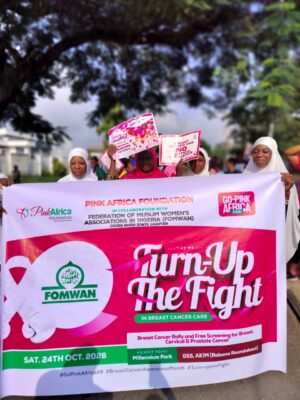
The Federation of Muslim Women’s Associations in Nigeria (FOMWAN), Cross River State Chapter, has received recognition for mobilising Muslim women to participate in cancer awareness and free medical screening programmes in the state.
The association received the Best Mobiliser Award from Pink Africa Foundation following its participation in a cancer awareness campaign and free medical screening exercise held on October 24, 2026, in Calabar.
The programme, organised by Pink Africa Foundation in collaboration with FOMWAN and other partners, featured an awareness walk, health education and free screening for breast, cervical and prostate cancers.

Several Muslim women, including FOMWAN members and non-members, benefited from the medical intervention, which sought to encourage preventive healthcare and improve access to early diagnosis.
Speaking on the recognition, FOMWAN Cross River State President, Hajia Lateefah Yahaya Idinye, described the award as an encouragement for the association to intensify its community health advocacy and humanitarian activities
.She said the recognition reflected the collective efforts of members who continued to mobilise Muslim women and support initiatives aimed at improving community wellbeing.“Our interest goes beyond receiving awards. We want to see more Muslim women become conscious of their health, take advantage of available screening opportunities and encourage others to do the same,” Idinye said.
She stressed that early detection was critical to the effective management of cancer, adding that every woman deserved access to health information and appropriate medical attention, irrespective of her religious, social or economic background.
The FOMWAN president also commended Pink Africa Foundation and its partners for providing free medical services and creating opportunities for women and other members of the public to access essential healthcare.
The recognition underscores the role of faith-based organisations in taking health education to grassroots communities and encouraging more people to embrace preventive healthcare, particularly where access to screening services remains limited.
