
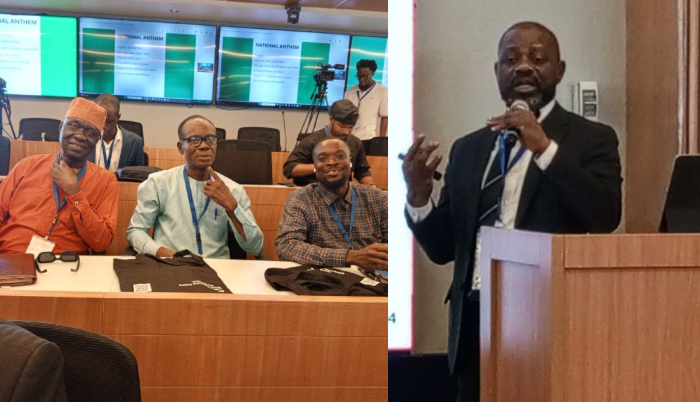
For Lagos-based Pan Atlantic University, there couldn’t have been a better way to demonstrate commitment to advancing the course of media education and practice in the country, than its recent programme.
It was the 4th in the series of its media roundtable, and the event brought together an impressive mix of media educators, practitioners and managers to x-ray media practice profitability within the auspices of Artificial intelligence (AI), and how to monetise journalism a major theme.
Date was 29 September 2026, and setting the tone of discussion was Head of Brands, Communications and Marketing, Temitope Falade.
Underscoring the day’s theme of Beyond the Byline: Monetising Journalism in the age of Artificial Intelligence, she illustrated with her personal encounter with a 12-year old boy who has cashed in on current technological advancements and was already monitising content online.
“There’s a whole lot that people are doing these days with AI.
“You don’t even have to be a professional journalist before you can create content” she stated.
“The Pan Atlantic University Media Roundtable was created as a platform for open dialogue about the future of the media
“At Pan Atlantic University we believe that the university should not only study the challenges facing society and the industry, it should also bring together, the people who can address them.
READ ALSO: Pan Atlantic University Graduation – And Women Took All The Accolades
READ ALSO: Masked Men Video: Police Commissioner Deploys Drones To Pan-Atlantic University
“Through this roundtable we want to contribute to a media industry that is professional, innovative ethically grounded and financially sustainable”, Falade stated.
According to her, whereas journalism continues to play an essential role – Informing the public, holding institutions accountable, shaping public conversations and providing credible information that people need to take informed decisions, the business model that supports journalism has come under considerable pressure, she added.
How To Monetise Journalism
“Traditional advertising revenue has declined or moved to digital platforms, audiences are increasingly fragmented, consumer habits are changing and many people now expect to access their news without paying for it.
“Media organisations are no longer competing with one another but with technology companies, influencers and almost endless stream of digital contents for the attention of the audience
“The question is how to pursue these values without sacrificing credibility Editorial independence and public trust”.
The dialogue, she submitted, must consider how organisations can build sustainable revenue models and diversify their income without compromising editorial independence
Falade’s submission opened the floodgate of submissions from other experts beginning with the keynote speaker, the West Africa Bureau Chief of CNBC Temitayo Fagbule,
Fagbule prefaced his presentation with a perspective of the news industry moving from flux to volatility, and how the use of AI Chatbots across markets has risen with trust issues in them.
Recalling how doggedness and commitment of journalists, in an era of military dictatorship caught his attention and interest, Fagbule said;
“I saw the media fight the military to a standstill using their biros
“I saw so much power, so much fearlessness that really caught my attention “.
Acknowledging that overtime, there had been a paradigm shift in the way news is produced and served, the speaker added that all the excitement about holding government accountable, needs money to be sustained.
“Before social media, hard news mattered, but now, with social media, it’s gone.
“Media contents should be tailored in the town-crier ‘agogo’ format, serving multiple purposes at a time, it can be used for religious activities, ceremonies, and as well as music,” he said.
In tandem with life generally which has remained dynamic he pointed out to the practitioner that:.
“As a journalist, to make your audience come to you, producing the best journalism is very important. Before you can monetise, it actually has to be what standout,” he noted.
The panel session moderated by a Senior Lecturer in the School of Media and Communication of PAU,
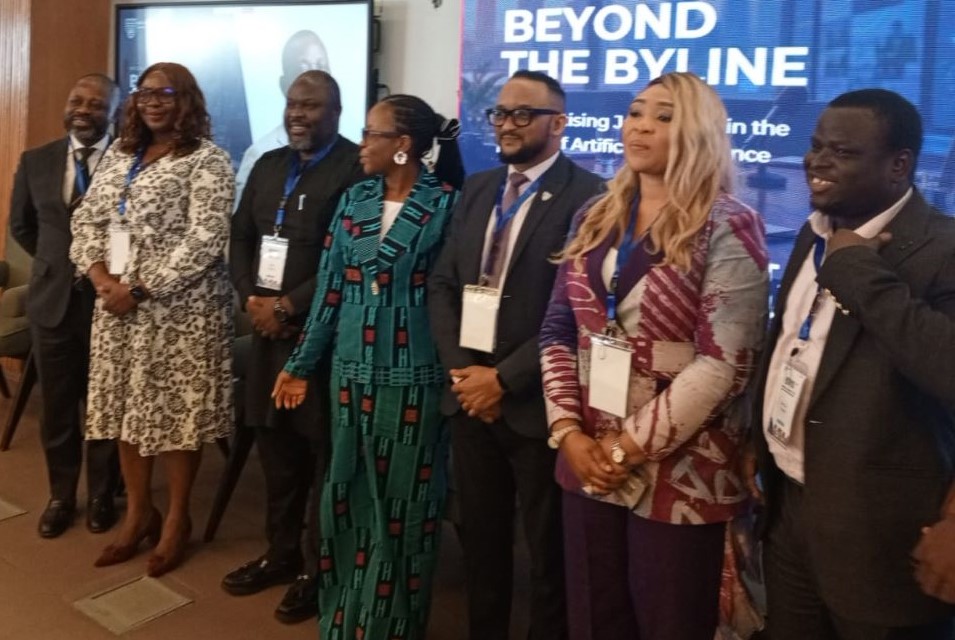 Dr Margareth Agadamba, had experts including Director of Commercials & Communication, News Central TV, Rosemary Egabor-Afolahan; Digital Payments’ platform expert Wale Olajubu; Acting Head of Department of Computer Science, School of Science & Technology, Pan Atlantic University, Dr Desmond Moru as well as Editor of Weekend Titles at Punch Newspapers, Samson Folarin, in her panel of discussants, and they, following the cues of the moderator did justice to their allotted questions.
How To Monetise Journalism
While highlighting the many advantages of AI to the newsroom, they underscored the need for caution in the use of AI-generated information.
Others ate that:
- Indiscriminate use of AI could lead to security issues even as misinformation deploying AI could create fear and undermine democratic institutions.
- Traditional fact checkers are vital defenders of truth but face constraints just like manual monitoring of endless digital and broadcast feeds is manually unsustainable, he submitted.
- that AI has come to stay is not a reason for the journalist to be gloomy. Instead, practitioners could strife to monetise quality content and defragment .to remain in contention.
For Egabor-Afolahan, media credibility requires not just funding but someone who has great passion for the media.
Illustrating with her platform, she admonished practitioners, “Fearlessly report what matters to the people. Sell trust and be consistent with it.
READ ALSO: How To Monetise Your Degree, Start Cashing Out Before Graduation
READ ALSO: 5 Secrets To Quick Facebook Monetisation
“Quite a lot of opportunities are opening up far beyond apprehension.
“Journalism today is a trust business far beyond the content business”, Egabor-Afolahan held.
Genuine efforts to monetise journalism, they agreed would require not only doing certain things differently but with intent.
Building on that, Folarin urged the practitioners to ask the questions: what do we do to differentiate ourselves? What do we do to be different and original that AI cannot replicate?
A highpoint of the session was the commendable umpiring by an alumnus of the university Onyinyechi Aderibigbe, whom, as Falade observed earlier, seemed to have started umpiring, not at 9 but right from the womb.

Cami Ezenwa is a Writer, Editor, Publicist, Biographer and Journalism Trainer
He has worked with the Daily Times, Daily Independent, Financial Standard and Business Television to mention some.
His ongoing Corporate Communications Master Class training series equips learners with credible hands-on skills for effective Media Relations, Public Communications & Corporate Affairs amongst others.
He can be contacted via 09165809519 or 08180335778.