
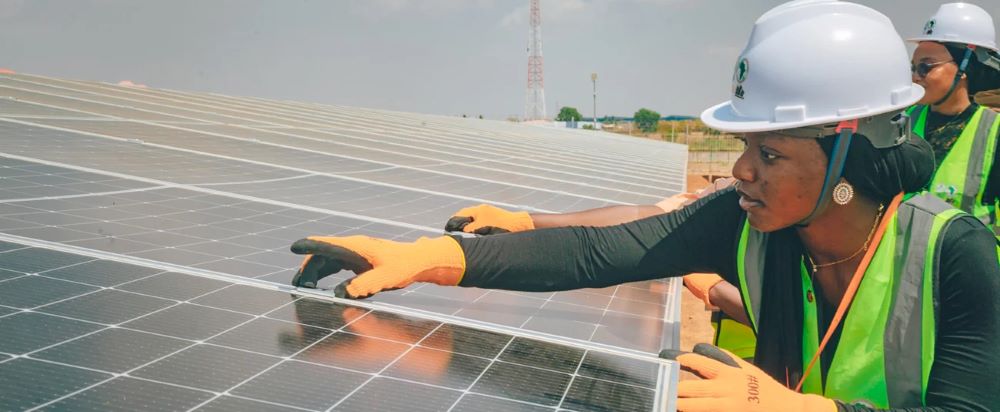
25 Nigerian universities and teaching hospitals may have outsmarted others over constant power outages at critical times by connecting to solar electricity.
The universities alongside three affiliated hospitals, did so under the under the Energising Education Programme of the Rural Electrification Agency (REA).
REA’s Managing Director of the Rural Electrification Agency (REA), Abba Aliyu, revealed this at the commissioning of a 3MW captive solar hybrid power project at Yakubu Gowon University, Abuja.
“This is just one of the projects that we have completed and the entire programme is positively impacting more than 300,000 students and over 50,000 academic and administrative staff with 100MW of clean energy deployed,” Aliyu said, without mentioning the names of the universities that have migrated to solar electricity.
He added that 3MW project would support critical campus infrastructure, including lecture halls, laboratories, ICT systems and administrative facilities, campus lighting and other essential services.
“It gives the university a more predictable energy base and strengthens its ability to operate as a modern teaching and research institution.
“These numbers are important, but the true value of the Energizing Education Program is not measured by the megawatts. It is measured by improved lighting environment, laboratories that can function more reliably, safer campuses, reduced pressure on university operating budgets, and the confidence it gives the institution to plan around reliable power. Over the years, Energizing Education has also taught us something else.
“When you build infrastructure at this scale, you have to think beyond the day it is commissioned,” he said.
“There is perhaps no better place to demonstrate the practical value of Nigeria’s energy transition than a university,” the Minister of Power, Joseph O. Tegbe said at the event.
According to him the investment demonstrated the practical connection between Nigeria’s energy transition and human capital development.
“A university brings together everything that a modern energy system is expected to support: learning, research, healthcare, technology, administration and, increasingly, the digital infrastructure through which knowledge is created and shared,” he added.
“The commissioning is not the conclusion of the investment. It is the beginning of its most important phase,” he said.

Cami Ezenwa is a Writer, Editor, Publicist, Biographer and Journalism Trainer
He has worked with the Daily Times, Daily Independent, Financial Standard and Business Television to mention some.
His ongoing Corporate Communications Master Class training series equips learners with credible hands-on skills for effective Media Relations, Public Communications & Corporate Affairs amongst others.
He can be contacted via 09165809519 or 08180335778.