
News
How One Lecture Rekindled Hope For Nature, The Environment


By Our Reporters
Rising concerns over indiscriminate degradation of the environment took the centre stage on Friday, January 30, 2026, in Lagos on the occasion of the 24th Chief S. L. Edu Memorial Lecture.
Attendees included environmentalists, faith leaders, students and other concerned citizens to reflect on humanity’s responsibility to the environment united by same goal: how to protect the earth for present and future generations.
The occasion which was organised by the Nigerian Conservation Foundation (NCF) held at The Hall, Our Lady of Perpetual Help, Victoria Island, beginning from about 11:00 a.m.
The lecture, themed To Have and To Hold: Faith and Care of the Environment, was delivered by the Bishop of the Sokoto Catholic Diocese, Most Rev. Dr. Matthew Hassan Kukah.
In his address, Bishop Kukah challenged society to rethink its relationship with nature, describing the environment as a sacred trust rather than a resource for reckless exploitation.
He warned that practices such as deforestation and indiscriminate plastic use are not merely environmental problems but reflections of deeper moral and leadership failures.
The Bishop further emphasised that people of faith must rise as custodians of moral clarity, using their influence to challenge injustice and promote responsible stewardship of the earth. His words resonated strongly with participants, many of whom saw the lecture as both a spiritual and social wake-up call.
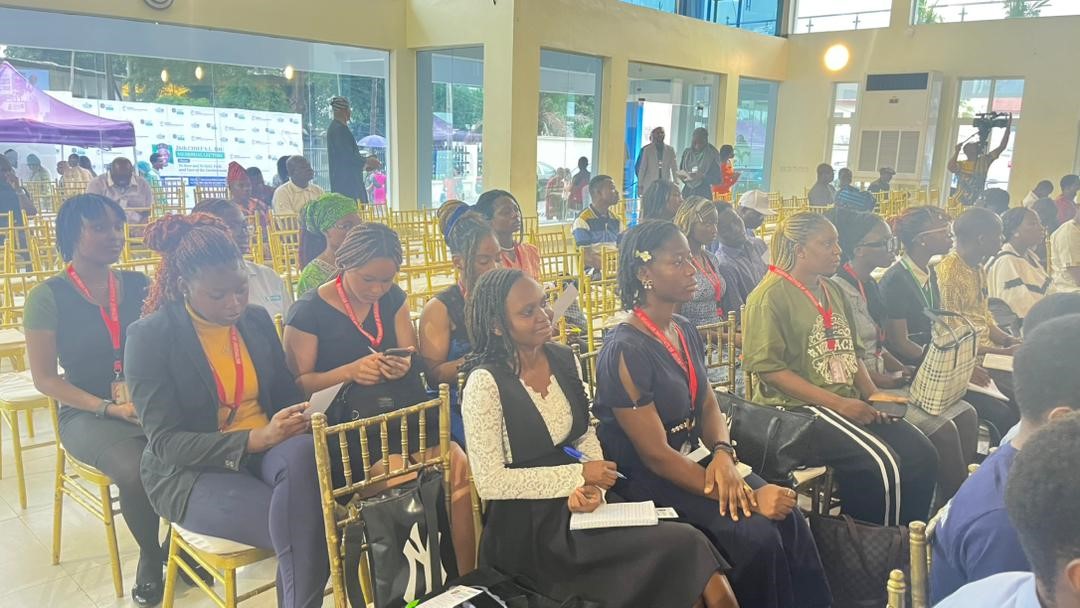
Cross section of Nigerian Institute of Journalism (NIJ) students, who attended Memorial Lecture.
Speaking ahead of the event, the Director-General of the Nigerian Conservation Foundation, Dr. Joseph Onoja, had highlighted the ethical dimension of sustainability.
“Sustainability is not only a technical challenge; it is a moral one,” he said, adding that “the future we seek must be guided by conscience as much as policy.”
Beyond the lecture hall, the message of environmental responsibility has continued to find relevance among educators and young people. Mr Anthony Oligbo, a lecturer at the Nigerian Institute of Journalism (NIJ), Ogba, Lagos, noted that meaningful environmental change begins with everyday choices.
“Individuals can reduce plastic waste by changing daily habits through the use of reusable items, refusal of single-use plastics, buying in bulk, and reusing plastic materials,” he said.
“This requires conscious behavioral change toward sustainability.”
READ ALSO: NATURE: Stakeholders Lament Ecosystem, Environment Abuse
READ ALSO: We’ll Leave No Stone Unturned Until We Achieve Set Targets –Lagos Taskforce Chairman
He also stressed that awareness alone is not enough, especially among students and youths who make up a large part of the population. According to him, institutions have a critical role to play in turning knowledge into action.
“Students can turn awareness into action through environmental education driven by schools, through curriculum adoption, the involvement of NGOs, government, and clubs like Ecozone, situated at the Nigerian Institute of Journalism, Ogba, Lagos,” Mr Oligbo explained, adding that such platforms encourage “responsible individual and collective sustainable action.”
The annual memorial lecture, held in honour of late Chief S. L. Edu, remains one of NCF’s flagship advocacy platforms. For over two decades, it has brought together policymakers, faith leaders and environmental advocates to discuss pressing sustainability challenges and proffer solutions rooted in ethics and responsibility.
As the event drew to a close, participants left with more than information—they carried a renewed sense of duty. From faith leaders to lecturers and students, the message was clear: protecting the environment is not optional. It is a shared responsibility that demands action today to secure a better tomorrow.




Lassa Fever On The Rampage Here, Claims 50 Lives

Breaking: UNIJOS Orders Evacuation Of Students

Breaking: ‘Don’t Kill Our Daddies.. ‘ -Protesting Families Of Alleged Coup Plotters

Rights Group Sensitises Teens At Menstrual Hygiene Seminar

Lagos Taskforce Launches Anti-Crime Patrol Unit To Combat Criminality

These Are The 2 Children, One Aged 3 And The Other 8..

Easter Alert: Defence Hqrs Mobilises Troops, With US Support

Ambassador Ajadi Tells Oyo Women Affairs Commissioner, Toyin Balogun: ‘I Commend Your Social Inclusion Drive’

Man Lures Lover To Stream, Then..

Gunmen Invade Wedding Venue, Gun Down 13, Abduct..

Another Viral Schoolgirl Assault: NAPTIP Delves Into Case

Major Problems That Businesses Face And The Solutions

Why You Shouldn’t Put Your Savings And Assets In Your Name

Revelation: Ebuka Obi Is About To Enter A Deep Well
