
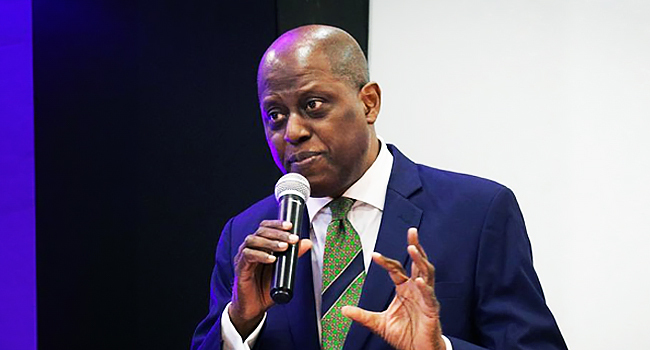
Bank directors and other industry leaders are now on the spot following a warning to them yesterday by the Central Bank of Nigeria (CBN) governor, Mr. Olayemi Cardoso.
This was at the Chartered Institute of Directors (CIoD) induction ceremony in Lagos, where he delivered a keynote address
Represented by the Director, Banking Supervision, CBN, Dr. Olubukola Akinwunmi, Olayemi warned that bank directors and other industry leaders risk decisive regulatory sanction should they take corporate governance issues with levity.
He described it as the foundation of trust and stability in the financial system, saying that the success of the recently concluded bank recapitalisation exercise would depend largely on the quality of leadership and oversight provided by directors.
“Nigeria’s financial sector has just completed a historic recapitalisation exercise.
“This reform was not simply a regulatory requirement, it was a strategic imperative to strengthen resilience, enhance investor confidence, and ensure that our institutions are positioned to support sustainable economic growth.
“As we enter this new phase, the role of directors becomes even more critical. Stewardship must now be exercised with sharper focus on consolidation, confidence, and stability”, the CBN governor stated.
The financial system, he inferred, has entered a new era governed by relevant policies aimed at sanitizing and sustaining the confidence of stakeholders.
“This era calls for directors who are not passive overseers but active stewards, leaders who balance profitability with sustainability, and compliance with innovation,” he said.
“The adoption of Risk-Based Capital Requirements represents a cultural shift in our financial system. Capital adequacy is no longer about size alone; it is about risk alignment.
“For directors, this means strategic oversight, ensuring capital planning anticipates both current and emerging risks; strengthening frameworks for credit, market, and operational risk; and taking responsibility for compliance without reliance on regulatory forbearance.”
“The end of forbearance signals a decisive shift towards stricter compliance with capital adequacy standards. Institutions must now align capital with their risk profile, ensuring resilience.”
READ ALSO: Emefiele: How $6.23m Was Moved From CBN To Fund Foreign Election Observers
READ ALSO: Financial Crimes: CBN Launches New Counter Measures
“These measures are not punitive, they are enabling. They provide directors with the framework to exercise stewardship with discipline, foresight, and confidence”, he said.
On the negative implications of weak corporate governance, he stated:
“Over the years, Nigeria’s banking system has been repeatedly tested by failures of corporate governance,” he said, adding, “where governance fails, the regulator must act to safeguard depositors and the economy.
“In January 2024, it dissolved the boards and management of three banks due to serious governance lapses and regulatory breaches”, he recalled adding that the new regulatory regime would demand higher levels of discipline from directors.
“This era calls for directors who are not passive overseers but active stewards, leaders who balance profitability with sustainability, and compliance with innovation,” he told the bank directors and other industry leaders.

Cami Ezenwa is a Writer, Editor, Publicist, Biographer and Journalism Trainer
He has worked with the Daily Times, Daily Independent, Financial Standard and Business Television to mention some.
His ongoing Corporate Communications Master Class training series equips learners with credible hands-on skills for effective Media Relations, Public Communications & Corporate Affairs amongst others.
He can be contacted via 09165809519 or 08180335778.