
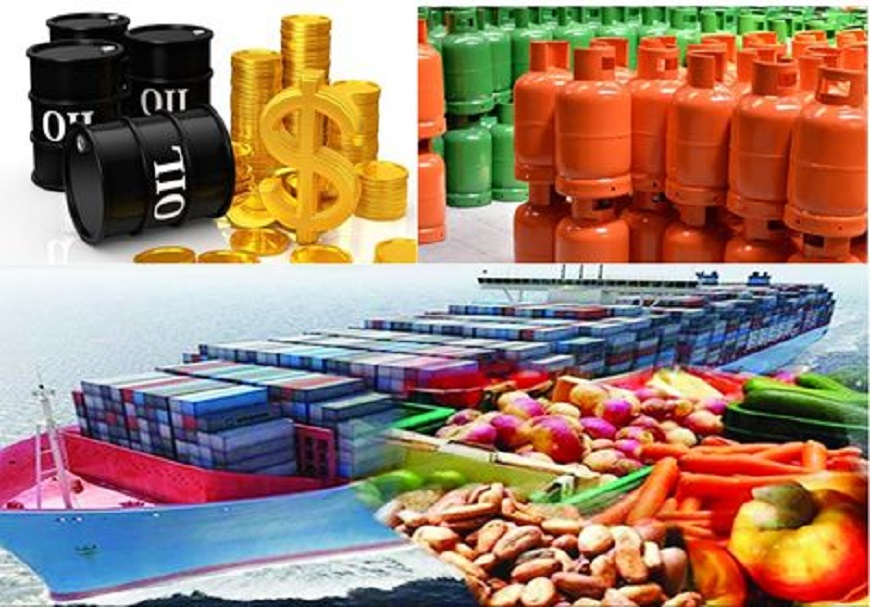
What are the key factors driving the Dollar to Naira Exchange rate relative stability in the last few days?
This is one of the many questions that are answered in this write-up, given the importance to the country meeting its fiscal policy targets.
Below therefore are some of the factors driving the Dollar to Naira foreign exchange rate:
- inflows from crude oil exports
- diaspora remittances
- foreign portfolio investments, and somewhat
- Improved liquidity within official channels could help reduce pressure on the parallel market.
Experts from both Abuja and Lagos are of the opinion that heightened demand and limited supply may sustain volatility in black market pricing, especially on the short term.
READ ALSO: Non Oil Exports: See List OF Products Driving Nigeria’s Foreign Exchange Earnings
READ ALSO: Learn How To Earn 600K Naira Online Every Month
Some are also pointing to the festering conflict in the Middle East region, involving particularly, Iran, which s a major oil producing country, and the United States of America, which is a leading consumer and also the source of the Dollar.
How does socio-political development in faraway regions influence exchanges? Well, the point has already been inferred, but again, the world as is already known has become a global village.
Diplomatic and economic interdependence has bound them together as literally saying, a global village. Businesses, investors and individuals engaging in cross-border transactions, usually pay in Dollars.
They need therefore to keep daily tab on its exchange rate relative to other currencies
Other points of interest include:
- Oil Revenue Inflows
President Bola Tinubu had, as at last month, issued an executive order to safeguard and enhance oil and gas revenues for the Federation.
The policy which would curb wasteful spending, eliminate duplicative structures in this critical sector of the national economy, and redirect resources for the benefit of the Nigerian people, is expected to also rub off on foreign exchange stability.
The Executive Order is anchored on Section 44(3) of the Constitution, which vests ownership, control, and derivative rights in all minerals, mineral oils, and natural gas in, under, and upon any land in Nigeria, including its territorial waters and Exclusive Economic Zone, in the Government of the Federation.
READ ALSO: Oil Prospecting Companies In Dilemma Over New Policy
READ ALSO: No More Nonsense: The Army Has Taken Over At Ugborodo
It is coming against the background of a recent record of nearly 1.46 million barrels per day production of oil.
Both policies are expected to bolster improved exchange rate for the national currency.
ii. Foreign Exchange Reserve
This is another key indicator driving the Dollar to Naira exchange. Incidentally, the Central Bank of Nigeria (CBN) Governor Mr. Olayemi Cardoso recently provided a relevant picture. He stated that Nigeria’s gross and net foreign reserves improved significantly at the end of 2025, reflecting stronger external sector fundamentals and sustained policy reforms.
At the post-MPC briefing on Feb 24, 2026, he stated that gross external reserves stood at $50.45bn as of Feb 16, 2026, while net FX reserves rose to $34.80bn at end-December 2025.
This is a clear indication that Nigeria’s external reserves remain robust and encouraging.
iii. Interest Rate Environment
The Central Bank of Nigeria (CBN), in the aftermath of the 304th meeting of the Monetary Policy Committee (MPC) in Abuja announced a reduction of the Monetary Policy Rate (MPR), the benchmark interest rate by 50 basis points from 27 per cent to 26.5 per cent.
The apex bank also retained the standing facilities corridor at +50 to -450 basis points and kept the Cash Reserve Requirements, CRR unchanged (deposit money banks 45%, merchant banks 16%, and 75% for non TSA public sector deposits).
“The committee’s decision was premised on a balanced evaluation of risk to the outlook, which suggests that the ongoing disinflation trajectory would continue, largely supported by the transmission of previous monetary tightening, sustained exchange rate stability and enhanced food supply.”
When investors are assured of high yield for their investments, especially via monetary policies, more foreign portfolio investment flood in, which tends to reduce liquidity pressures on the local currency

Cami Ezenwa is a Writer, Editor, Publicist, Biographer and Journalism Trainer
He has worked with the Daily Times, Daily Independent, Financial Standard and Business Television to mention some.
His ongoing Corporate Communications Master Class training series equips learners with credible hands-on skills for effective Media Relations, Public Communications & Corporate Affairs amongst others.
He can be contacted via 09165809519 or 08180335778.