
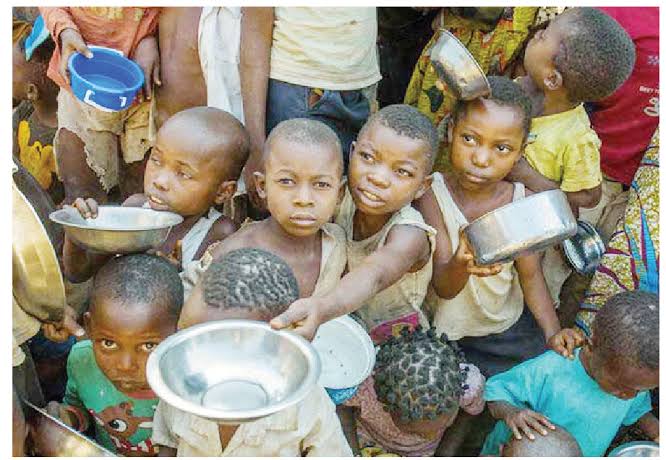
Why is that the N125 million worth of commodities meant to alleviate children suffering malnutrition crisis in Nasarawa State has not arrived?
This is the million naira question given that the state government had already released funds in lieu of the intervention, while the expected distribution of the procured supplies has reportedly stalled for about a month.
The delay comes as the state records a stunting rate of 35 per cent malnutrition crisis among children, meaning more than one in every three children is affected by impaired growth, according to the 2023–2024 National Demographic and Health Survey (NDHS).
The Civil Society Scaling Up Nutrition in Nigeria (CS-SUNN) raised concerns over the situation during a media engagement in Lafia, identifying inadequate funding, late budget releases and bureaucratic delays as major obstacles to tackling malnutrition.
The organisation’s State Coordinator in Nasarawa, Aboki Jonah, said the state government released ₦125 million through a matching grant for the procurement of nutrition commodities.Although some of the supplies have been procured and delivered to the state, he said getting them to the intended beneficiaries has become a major challenge.”Commodities have been procured, but distribution of those commodities is a greater challenge now.
For like a month now, those commodities have been procured, but they have not been distributed,” Jonah said.He explained that the Primary Health Development Agency is responsible for distributing the commodities because of its closeness to communities at the grassroots
.The delay in distributing Nasarawa’s ₦125m nutrition commodities raises concerns about how quickly children requiring nutritional support can access the supplies, particularly in communities already experiencing a high burden of malnutrition.Jonah identified Awe Local Government Area as having a higher prevalence of malnutrition than the state average, while Nasarawa Local Government Area also requires attention.
Beyond the distribution challenge, CS-SUNN said inadequate and delayed funding has continued to affect nutrition programmes across the state.
Speaking at the engagement, the organisation’s Senior Programme Officer, Kunle Ishola, said Nasarawa records a stunting rate of 35 per cent, a wasting rate of about 9.6 per cent and a high prevalence of underweight among children under five.He warned that stunting has lasting consequences for children’s brain development and productivity in adulthood.”Out of 100 children, 35 of them are already stunted.
If children are said to be leaders of tomorrow, that means we are raising 35 stunted leaders for tomorrow in Nasarawa State,” Ishola said.He added that children continue to fall into moderate acute malnutrition (MAM) and severe acute malnutrition (SAM), warning that delays in getting nutritional commodities to them could worsen their condition.
According to him, some children die when the necessary commodities do not reach them in time, while others require hospitalisation, placing additional pressure on health facilities.Ishola also identified bureaucratic bottlenecks within government ministries, departments and agencies as a major obstacle to nutrition financing.
He said nutrition desk officers often understand the challenges and funding requirements but lack the authority to approve the necessary resources. He added that some senior decision-makers do not adequately understand the difference between food security and nutrition security, affecting their ability to make informed decisions on nutrition funding.
READ ALSO: Why Nigeria should Ban Genetically Modified Organisms (GMOs) Immediately
READ ALSO: Acute Food Scarcity Hits 31.8m Nigerians -FG
The programme officer further criticised the timing of budget releases, saying funds meant for activities spread across the year often arrive towards the end of the budget cycle.”Most of these releases come at the tail end of the year. You have 20 activities for the year divided into quarters, but you get the money in November to implement all of them.
There will be rush,” he said.Despite the challenges, Ishola acknowledged the approval of the Nasarawa State Policy on Food and Nutrition and the Multi-Sectoral Strategic Plan of Action for Nutrition as progress in the state’s response to malnutrition.
However, he maintained that policy commitments would have limited impact without adequate and timely funding. CS-SUNN called for stronger collaboration among government ministries and other sectors, in containing the malnutrition crisis stressing that addressing malnutrition requires more than food supplies alone.
The organisation is implementing the Partnership for Improving Nutrition Systems (PINS) 3.0 project in Nasarawa, Kano, Lagos, Niger and Kaduna states. Its engagement in Lafia was aimed at encouraging accurate media reporting and increasing public awareness of nutrition challenges.
For children in communities such as Awe, the effectiveness of these interventions will depend not only on the money allocated or commodities procured, but also on whether the supplies reach the health facilities and families that need them.

Emiabata Deborah Oluwabusiolami
Stay informed with the latest news, breaking stories and important updates. Follow THE EAGLE NEWS MEDIA WhatsApp Channel.
Join Our WhatsApp Channel