
Lifestyle
Early Childbearing: Severe Consequences Adolescent Girls, Parents Must Note

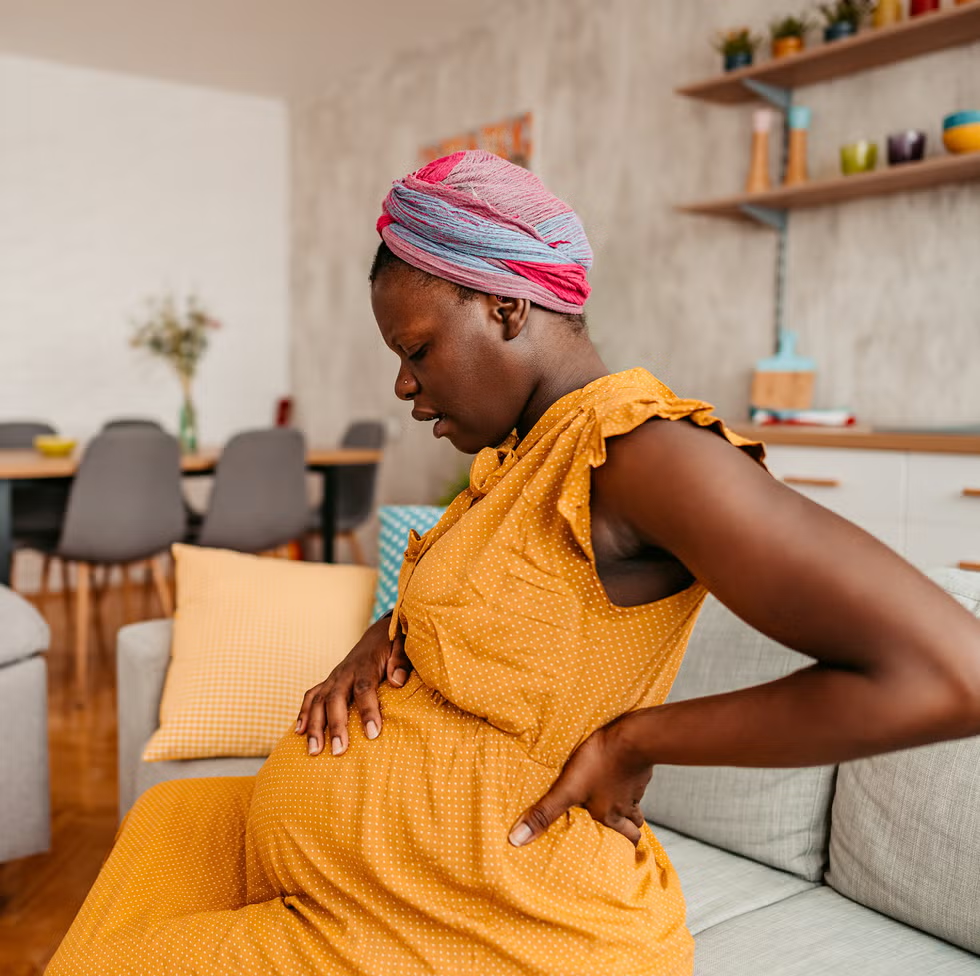
Early childbearing, or pregnancy and delivery during adolescence, can have very severe consequences for a girl, equally leaving devastating consequences for families.
This comes amidst 2023 data indicating that globally an estimated 13 per cent of adolescent girls and young women give birth before age 18.
Here are some shocking realities about early childbearing of interest:
- Many girls who are pregnant are pressured or forced to drop out of school, which can impact their educational and employment prospects and opportunities.
- Early pregnancy and childbearing can also have social consequences for girls, including stigmatization and reduced status in the home and community. They can also lead to rejection and violence by family members, peers and partners as well as early and forced marriage.
- Adolescent girls, especially those in early adolescence, are particularly vulnerable to the health consequences of pregnancy and delivery as their bodies may not be physically ready.
Common diseases and infections associated with Early childbearing
- Obstetric fistula, eclampsia, puerperal endometritis and systemic infections are just some of the serious conditions that they may face in the short- and long-term.
- Globally, maternal conditions are among the top causes of disability-adjusted life years (DALYs) and death among girls aged 15–19.
- Globally, almost one in six young women give birth before age 18 which in 2023, is approximately 13 per cent of adolescent girls and young women globally reported giving birth before age 18.
- This per cent, however, has been found to vary by a number of factors including the region, the country, the location within the country (rural vs. urban) and the adolescent girl’s or young woman’s levels of income and education.
- In 2023, while about 10 per cent of adolescent girls and young women in South Asia and Latin America and the Caribbean gave birth before age 18, this percentage more than doubles when considering the regions of sub-Saharan Africa.
- In both Western and Central Africa and Eastern and Southern Africa, around 25 per cent of adolescent girls and young women during this same period gave birth before age 18. In these regions, this amounts to an estimated 11 million young women.
READ ALSO: How Teenager Running From Girlfriend’s Brother Fell And …
READ ALSO: What Student Did In College Bathroom That Made Police Arrest..
Adolescent birth rate
The adolescent birth rate, or the annual number of births to adolescent girls and young women aged 10–14 or 15–19 years per 1,000 adolescent girls and young women in that age group, is another critical measure of early childbearing.
Sub-Saharan Africa had the highest regional adolescent birth rate at 3 births per 1,000 adolescent girls aged 10–14 and 93 births per 1,000 adolescent girls and young women aged 15–19.
In contrast, Western Europe, Europe and Central Asia, and North America had some of the lowest adolescent birth rates.
Among girls aged 10–14, the rates were near 0 births per 1,000, while among girls and young women aged 15–19, the rates were 15 or fewer births per 1,000.
READ ALSO: Regular Exercises That Can Reduce Your Risk Of Chronic Diseases, Boost Brain Health
Generally fewer adolescent girls receive antenatal, skilled delivery or postnatal care for themselves or their newborns as compared to older women.
Medical Care for early childbearing girls
- In most regions, fewer adolescent girls and young women receive antenatal, skilled delivery or postnatal care for themselves or their newborns as compared to all women and girls.
- As most adolescents who are pregnant are experiencing pregnancy for the first time, the need for careful monitoring and quality care during the antenatal, delivery and postnatal periods is generally more acute.
- Paradoxically, coverage of maternal health indicators, including contact with health system and quality of care, appear lower among adolescent girls than among all women and girls for most regions of the world.
- However, it should be noted that the difference in coverage between adolescents and all women is small in some regions, and in the case of Eastern and Southern Africa, coverage of skilled delivery and postnatal care for newborns is higher for adolescent girls.
-UNICEF


Early Childbearing: Severe Consequences Adolescent Girls, Parents Must Note

How You Can Reduce Risk Of Communicable Diseases –Dieticians

Sen Dickson Unveils NDC’s Digital Membership Registration Portal

‘Why We Are Not Keeping Our Money In Banks’

Yes, Our Train Derailed Near Asham.. –Nigeria Railway Corporation

Cyberbullying, Privacy Violation: Tiktok Streamer Peller, Faces N395m Lawsuit

Tinubu Rewards D’Tigress Basketball Team Members Big

Burna Boy Makes Another History, With $3m Tour

Dormant Account Reactivation: CBN Has Simplified It For You

Investment And Financial Security Planning

Friends Raise Funds For Canada-Based Nigerian, Rodiyat Alabede Who Died Donating Blood

Top Tips On Building And Maintaining Healthy Relationships

Pregnancy-friendly Superfoods: Building Your Baby Bite By Bite

Heavy Rainfall, Flash Flooding Coming, Govt Warns
