
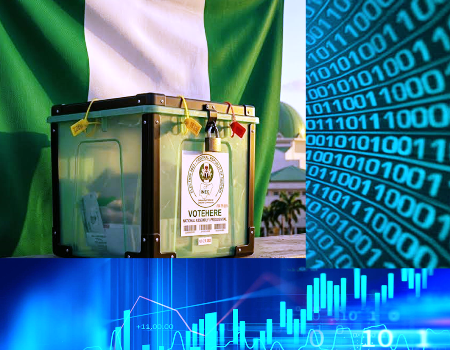
Nigeria’s 2027 elections are around the corner. In fact, in about three months from now, eligible voters would return to the polls.
They would be seeking to elect their preferred candidates as next president as well as National Assembly representatives in an election scheduled for January 16, 2027
This would be followed some three weeks later, February 6, 2027 to be precise when, all things being equal they cast their votes for governorship and States Houses of Assembly election.
There is an intriguing list of qualified candidates across all the parties. This and the imminence of these dates, have accounted for increasing tempo in the nation’s polity, especially the horse trading that characterise the times..
As Nigerians prepare for these elections, what are the key developments and issues that they should watch?
Here is a guide:
- INEC’s candidate lists and the disputes surrounding them
The Independent National Electoral Commission had last September 11 for example, published the final list of presidential candidates and their running mates for the January 2027 general elections.
Signed by the Secretary to the Commission, Rose Oriaran-Anthony, the lisit contains candidates sponsored by 18 political parties, comprising 16 males and two females.
It includes Bola Tinubu of the All Progressives Congress, Atiku Abubakar of the African Democratic Congress, Peter Gregory Obi of the Nigerian Democratic Congress, Adewole Ebenezer Adebayo of the Social Democratic Party and Oluseyi Abiodun Makinde of the Allied Peoples Movement as top contenders.
Observation shows that following this, there has been internal squabbles over candidates’ eligibility, a purely internal party affairs.
 Disagreements over governorship candidates for example have centred on such issues as party membership records, nomination procedures and the circumstances under which candidates may be omitted from official lists.
The next stage deserves close attention.
READ ALSO: One-Party Agenda: SSG Akume Rises In Defence Of Tinubu
READ ALSO: Breaking: US Publishes Names, Photos Of 124 Nigerians For Deportation
Amidst the horse trading, would affected parties meet INEC’s deadlines in submitting the required lists? Will the commission review the complaints? Will the courts be asked to determine whether the relevant requirements were properly applied?
These questions matter because disputes over nominations can continue even after parties have announced their preferred candidates.
What Nigerians should watch: Official updates from INEC, court decisions, responses from affected parties and any corrections to published candidate lists. Claims made by politicians should be distinguished from decisions formally issued by the commission or the courts.
The Eagle reports Joash Amupitan, chairman of the Independent National Electoral Commission (INEC), asserting that party disputes would not stop the conduct of the 2027 elections.
- The voter register, voter cards and access to polling units
It is a statement of the obvious that a credible electoral process requires an accurate voter register and clear arrangements that allow eligible voters to establish their registration details and understand the procedures for voting.
The Independent National Electoral Commission has reported progress in voter registration ahead of the 2027 elections. A Channels Television report published on October 5 highlighted an expanded register and preparations involving additional election technology
However, a larger register alone does not establish how accessible or effective the voting process will be.
Nigerians should also pay attention to the verification of registration records, the publication of official voter information, the collection of permanent voter cards where applicable, and the provision of clear guidance to citizens.
For voters, practical questions matter: Is their registration information correct? Do they know their polling location? Have they checked the latest instructions on voter identification and accreditation?
For election administrators, the challenge includes ensuring that the register is maintained properly and that eligible voters receive accurate information before election day.
What Nigerians should watch: INEC announcements on voter registration, voter-card collection, polling-unit information, accreditation procedures and the publication of the official register.
The commission’s official website would come handy in this wise.
READ ALSO: What 2027 General Election Should Be All About -APM Governorship Candidate
READ ALSO: ADC, Accord, 3 Others May Not Contest The 2027 General Elections Unless…
- Party defections, alliances and the search for political advantage
The movement of politicians between parties is another development that could influence the organisation of the 2027 elections.
In the run-up to a general election, political figures may change parties, negotiate alliances or support candidates outside their original political platforms. These decisions can affect party structures, campaign organisation and relationships between political groups.
For example, the Voice of Nigeria reported on October 10 that the APC received 11 House of Representatives and state assembly candidates who had defected from the African Democratic Congress and the Nigerian Democratic Congress,
Such developments are worth reporting, but their significance should not be exaggerated.
A politician’s defection does not automatically mean that every supporter, party member or voter in that politician’s constituency will follow the same path. The effect of an alliance also depends on the issues involved, the organisation of the participating parties and the choices voters ultimately make.
Nigerians should therefore look beyond photographs of politicians at party headquarters and examine the practical details of each political realignment.
However, The Eagle Newsmedia reports human rights lawyer and a Senior Advocate of Nigeria (SAN) Femi Falana has recently, warned against the disqualification of political parties saying if not checked, it portends danger for the country.
Delivering a lecture titled “Restoring Electoral Integrity: The Pathway to Good Governance and Public Accountability” warning that the deregistration of political parties and attempts to prevent others from participating in elections could trigger a political crisis.
What Nigerians should watch: The identities and official affiliations of defectors, the terms of announced alliances, the candidates involved and whether political groups maintain separate platforms for other contests.
The central question is not simply how many politicians have changed parties, but what those changes mean for political organisation and voter choice.
- Election rules, court decisions and changes to the timetable
The legal framework governing the elections is another issue that deserves sustained public attention.
Election administration depends on deadlines and procedures covering matters such as party nominations, submission of candidate information, campaigns and voting. Disagreements about these rules can create uncertainty for political parties, candidates and election officials.
In June 2026, INEC defended its decision to appeal court judgments concerning aspects of the 2027 election timetable, warning that conflicting judicial decisions could complicate preparations.
This makes it important for Nigerians to follow both the rules themselves and the legal decisions interpreting them.
A court judgment may affect a particular procedure without automatically invalidating the entire electoral process. Similarly, a political party’s interpretation of a judgment should not be treated as the final legal position unless supported by the relevant ruling or subsequent official action.
The dates Nigerians see circulated online should also be checked against the latest official timetable, particularly where legal proceedings or changes in electoral legislation may affect earlier arrangements.
What Nigerians should watch: Official INEC notices, enacted electoral legislation, court judgments and any formally announced changes to election dates or administrative deadlines.
Understanding these developments will help citizens separate verified changes from speculation and partisan claims.
- Election technology, security and public confidence
The fifth issue is whether preparations for election day will support transparent procedures, safe participation and confidence in the results.
Election technology can assist with voter accreditation and the transmission or management of election information, depending on the system provided for under the applicable rules. However, technology is only one part of the process.
Its effectiveness also depends on equipment readiness, staff training, reliable procedures, contingency arrangements and clear communication when problems arise.
Security is equally important. Voters, candidates, journalists, observers and electoral officials need an environment in which they can participate without intimidation or violence.
Concerns about technology or security should be assessed using specific evidence. An isolated technical failure, for instance, should be investigated on its facts rather than automatically treated as proof that an entire election has been compromised. Equally, officials should communicate clearly about problems and explain what corrective measures are taken.
Public confidence also depends on how results are documented, announced and challenged through lawful procedures.
What Nigerians should watch: INEC’s readiness announcements, equipment testing, training for election personnel, security arrangements, observer reports and the official handling of complaints.
The important question is whether the arrangements are clear, verifiable and consistently applied across affected areas.
What these five developments mean for ordinary Nigerians
The 2027 elections will be more than a contest between political parties and their candidates. They will also test the institutions and procedures responsible for organising the vote.
READ ALSO: Senate Representation: Why Ambassador Ajadi Will Be Best Choice For Oyo Central
READ ALSO: Breaking: APM Receives Thousands Of Defecting Members Form APC, ADC, Accord Party
Candidate disputes will show how nomination rules are applied. Political defections will reveal how parties organise and negotiate. Court decisions will clarify the legal framework. Voter-register preparations will affect citizens’ ability to participate, while technology and security arrangements will be important to the conduct of the elections.
None of these developments, considered alone, can determine the outcome or establish whether an election will be credible. Their significance will depend on the evidence, the actions taken by the relevant institutions and the choices made by voters.
For Nigerians, the most useful approach is to follow official decisions, examine competing claims carefully and ask public officials specific questions about their responsibilities.
Political announcements may attract attention, but the details of implementation deserve equal scrutiny.
Conclusion: Look beyond the political headlines
As the 2027 election season progresses, Nigerians should pay attention not only to the politicians seeking office but also to the rules, records and safeguards that govern the process.
The coming months will provide further opportunities to assess how candidate disputes are resolved, how parties organise themselves, whether election preparations remain on schedule and how institutions respond to legitimate concerns.
For voters, staying informed means checking original documents, confirming announcements with the relevant authorities and distinguishing established facts from political promises or allegations.
Ultimately, public confidence will depend not simply on what political actors say about the elections, but on what can be demonstrated through transparent procedures, accountable decisions and credible evidence.
The Eagle Newsmedia will continue to follow these developments as the 2027 general elections approach.
