
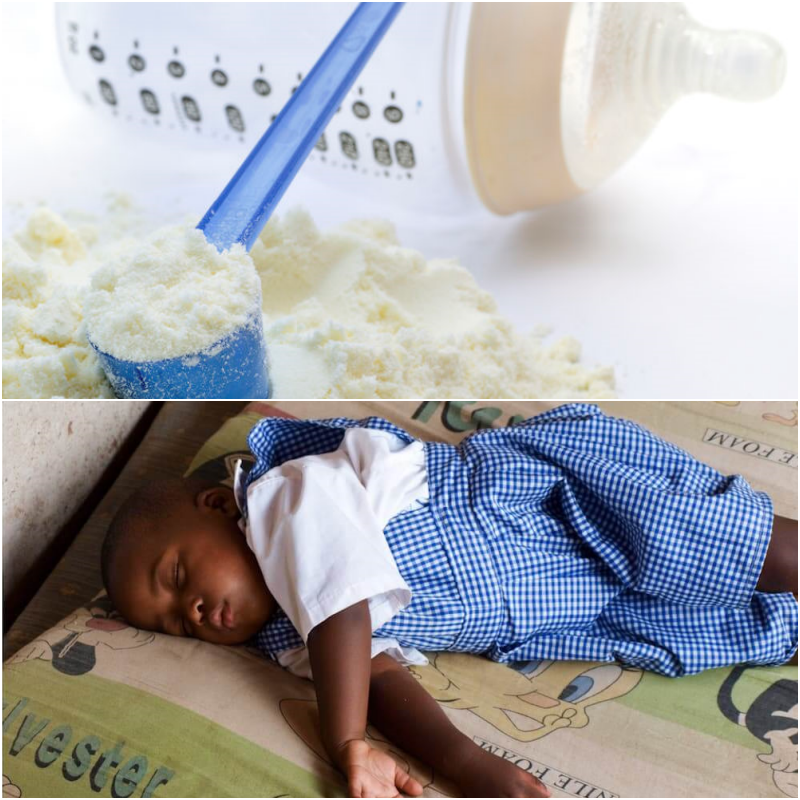
An increasing level of caution is rocking the food production industry and health facilities following reports of contaminated infant formula in circulation.
The news has also left shock waves within healthcare regulatory systems as well as households for the obvious implications.
This is happening amidst controversy over what should be the acceptable level of cereulide in infant formula, even as national bodies are not waiting for that to be determined first before embarking on cautionary measures.
Potentially contaminated products have thus far been recalled in over 60 countries, reports show, even as France has resolved to impose stricter limits on the acceptable level of cereulide, the toxin present in infant formula after
The country had, last year, launched an investigation into the deaths in December and January of two babies who were thought to have drunk possibly contaminated powdered milk.
“Protecting the health of infants is the top priority for health authorities,” the French agriculture ministry had reportedly said Friday.
The recall of potentially contaminated infant formula has drawn attention to Chinese firm Cabio Biotech, reputed as one of the world’s largest producers of ARA.
ARA is a fatty acid used primarily in baby formula and food products the supplier of an ingredient used in infant formula which is suspected of being tainted.
Further checks by The Eagle shows many national and international bodies reacting to the development around Contaminated Infant Formula
The European Food Safety Authority (EFSA), an arm of the European Union, has said that multi-country recalls of several infant nutrition products (different batches, products, and brands) are ongoing following the detection of cereulide, a toxin produced by the bacterium Bacillus cereus.
READ ALSO: High Maternal & Infant Mortality: Federal, Enugu Govts Move Into Action
READ ALSO: Why Medical Research Scientists Are Demanding Infant Mortality Audits
Stating that the toxin could can cause nausea, vomiting and diarrhea, EFSA added:
“The precautionary recalls and withdrawals were initiated in December 2025 and continue in January 2026 as a preventive public health measure.
“The recalls are global, with products sold both in Europe and in countries outside of Europe”.
Alerting on the danger of the toxin on infants it stated:
“In younger infants, it can change the body’s salt balance and lead to complications such as dehydration.
“The possible negative health effects are considered low to moderate and depend on the infant’s age, with neonates and infants under six months more at risk of severe disease.
“As the products are being withdrawn and recalled in many countries, the likelihood of further exposure is decreasing”.
Other accounts state say there had been reports of diarrhoea in infants following consumption of the recalled products, and that in one case, an infant who had consumed formula from a recalled batch tested positive for the toxin and developed vomiting and diarrhoea, with a favourable recovery.
While this is not enough to authenticate dangers, is that vomiting and diarrhoea in infants are common symptoms and can be caused by many different factors, including viral infections such as norovirus.
This is even as the European Commission has asked the European Food Safety Authority (EFSA) to establish a standard for cereulide in children’s products, and would issue an opinion on February 2.
Meanwhile a Dutch consumer watchdog Foodwatch has filed a criminal complaint in Paris, France, naming seven infant formula manufacturers — Nestlé, Lactalis, Danone, Vitagermine (Babybio), Hochdorf, La marque en moins, and Granarolo — over their handling of a global contamination crisis. The complaint, filed “against X” under French procedure, opens an investigation that could expand to include food safety authorities.
READ ALSO: Non-Communicable Diseases Threat: Healthcare Sector Put On The Alert
READ ALSO: Organisation Launches Digital Learning Platform, Trains 500 Health Workers
Eight affected families have reportedly joined the complaint to date.
The report says under French law, a complaint “contre X” allows prosecutors to investigate all parties potentially responsible, with formal charges determined during the investigation.
Baby formula is often described as one of the most tightly regulated foods in the world. Yet it has been repeatedly shaken by contamination scares, factory shutdowns and supply shocks, adds one report in Bloomberg, that manufacturers in recent years have pushed formula closer to breast milk by adding lab-produced fatty acids and other compounds designed to align with medical guidance and parental expectations.
There were no immediate reactions to the development by series of food regulatory agencies in Nigeria according to The Eagle checks.

Cami Ezenwa is a Writer, Editor, Publicist, Biographer and Journalism Trainer
He has worked with the Daily Times, Daily Independent, Financial Standard and Business Television to mention some.
His ongoing Corporate Communications Master Class training series equips learners with credible hands-on skills for effective Media Relations, Public Communications & Corporate Affairs amongst others.
He can be contacted via 09165809519 or 08180335778.