
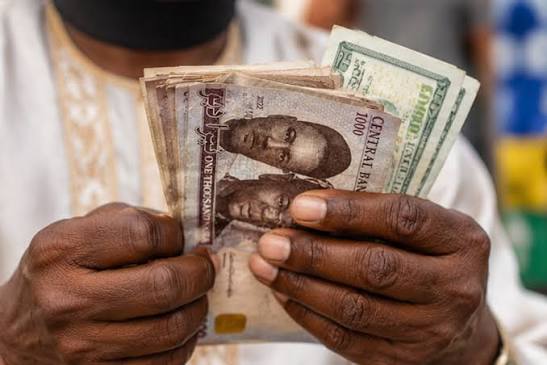
Nigeria’s foreign reserves fell by $406m in one month as the naira weakened against the dollar in both the official and parallel markets, raising concerns about pressure on the country’s external position.
Data from the Central Bank of Nigeria (CBN) showed that gross external reserves dropped to $54.713bn on November 18 from $55.119bn on October 19. Over the same period, the naira’s official market closing rate weakened to ₦1,388/$ on November 19 from ₦1,333.50/$ a month earlier, losing ₦54.50.
At the parallel market, the currency traded at about ₦1,440/$ on Thursday, compared with ₦1,375/$ a month earlier, representing a depreciation of ₦65. The reserve decline comes less than two months after CBN Governor Olayemi Cardoso announced that Nigeria’s reserves had crossed $55bn, their highest level in more than 18 years.
He attributed the growth to consistent monetary policies and contributions from Nigerians in the diaspora.
Economist and emerging markets expert Ike Ibeabuchi linked the naira’s weakness and falling reserves to reduced dollar supply and rising foreign exchange demand.
He said lower inflows from exporters and investors could limit dollar availability, while demand for imports and international transactions continued to pressure the currency.
In addition, Ibeabuchi identified the festive season as a possible factor, noting that demand for foreign exchange often increases during the period.
Similarly, the Chief Executive Officer of the Centre for the Promotion of Private Enterprise, Dr Muda Yusuf, identified political spending, capital flight and policy uncertainty as possible reasons for the currency’s weakness.
Yusuf explained that political spending could increase liquidity in the economy and put additional pressure on the naira. He also warned that statements by some political actors about reversing President Bola Tinubu’s economic reforms could affect investor confidence.
According to him, proposals to restore petrol subsidies could create uncertainty among foreign investors and encourage portfolio investors to withdraw their funds.
However, Yusuf stressed that he did not have all the facts and presented these factors as possibilities rather than confirmed causes.The naira’s continued weakness could increase costs for import-dependent businesses, particularly those that rely on foreign materials and international transactions.
This could also contribute to higher consumer prices if businesses transfer the additional costs to customers.
Although Nigeria’s foreign reserves remain above $54bn, the latest decline has renewed concerns about dollar supply and exchange-rate stability.

Cami Ezenwa is a Writer, Editor, Publicist, Biographer and Journalism Trainer
He has worked with the Daily Times, Daily Independent, Financial Standard and Business Television to mention some.
His ongoing Corporate Communications Master Class training series equips learners with credible hands-on skills for effective Media Relations, Public Communications & Corporate Affairs amongst others.
He can be contacted via 09165809519 or 08180335778.
Stay informed with the latest news, breaking stories and important updates. Follow THE EAGLE NEWS MEDIA WhatsApp Channel.
Join Our WhatsApp Channel