
By Elijah Funmilayo Iyanuoluwa
Off duty, she may look like an adorable piece of creation, whereas in reality, picture of a stolen innocence.
And in different shades, she dots the nooks and crannies of our neighbourhoods, either with wares on her weakening heads to sale, or another equally vulnerable baby on her back to nurture.
Child labour remains a distressing reality in Nigeria, in fact one of its biggest social problems.
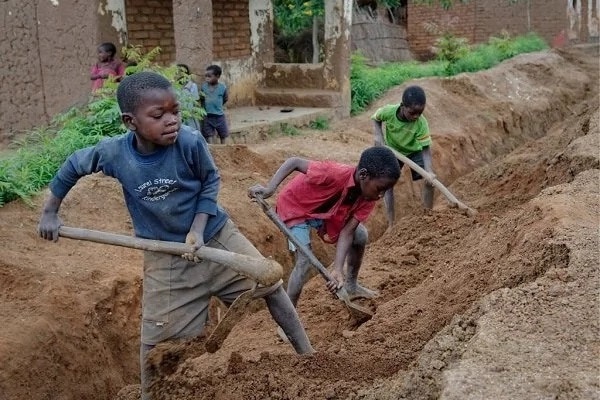
It has sentenced many children, to daily, hazardous and exploitative work, including street vending, farming, domestic work, as mine hands or to engage in street begging. These often deprives children of their innocence and rights, exposing them to dangerous conditions.
The social evil of child labour in Nigeria is driven by a complex interplay of factors, poverty being a major underlying cause, as families facing economic hardships often rely on their children’s labour as a means of survival.
Child labour has a devastating impact on children’s education, with many victims forced to drop out of school or attend irregularly.
This disrupts their learning process, hinders their academic progress, and perpetuates cycles of illiteracy and poverty. Denied an education, these children face limited opportunities for personal growth and development.
There are also associated exposure to health and safety hazards especially at work places – in the streets, mines, farms, or construction sites.
Child labor robs children of their childhood, denying them the chance to engage in social interactions, play, and develop essential life skills.
These experiences are crucial for their overall social and emotional development. The absence of a normal childhood can lead to stunted personal growth, diminished self-esteem, and limited social integration.
What Are The Options To Combating Child Labour
Eradicating child labour requires a multi-faceted approach. It demands collaborative efforts from the government, civil society organisations, communities, and individuals.
These include strengthening legislation and law enforcement to ensure the protection of children’s rights, promoting access to quality education, and providing economic support and livelihood opportunities for families living in poverty.
READ ALSO: We Care Storms Town With Anti Human Trafficking, Child Labour Campaigns
READ ALSO: How 5 Agents Trafficking Nigerian Children Overseas Were Nabbed
Awareness campaigns and social mobilisation are also crucial in raising public consciousness about the harmful consequences of child labour and promoting a shift in societal attitudes.
Collaboration with international organisations and advocacy groups can further support initiatives to combat child labor, sharing best practices and providing resources for effective intervention.
However, by acknowledging the prevalence of child labour and working collectively to address its root causes, can lead to better nurturing of children and their healthy development.

Cami Ezenwa is a Writer, Editor, Publicist, Biographer and Journalism Trainer
He has worked with the Daily Times, Daily Independent, Financial Standard and Business Television to mention some.
His ongoing Corporate Communications Master Class training series equips learners with credible hands-on skills for effective Media Relations, Public Communications & Corporate Affairs amongst others.
He can be contacted via 09165809519 or 08180335778.