
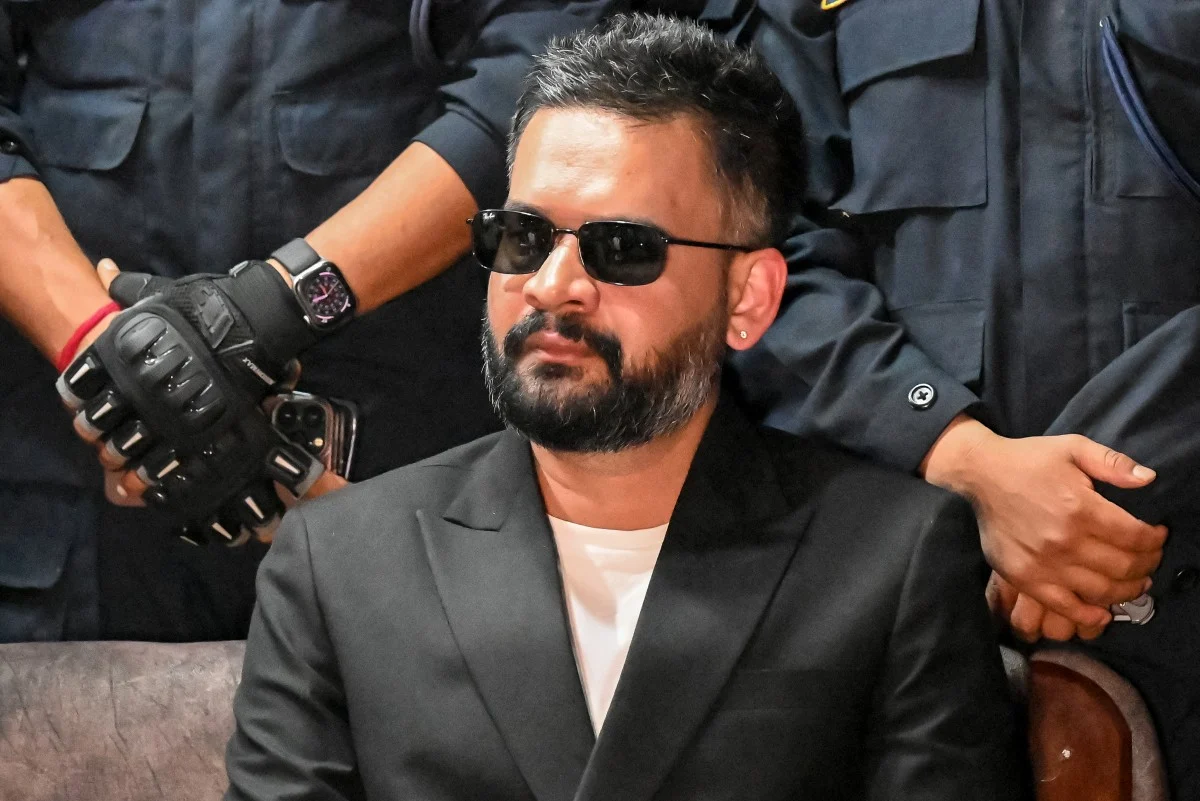
A 35 year old music rapper is set to become his country’s youngest Prime Minister in a parliamentary election that followed deadly anti-corruption riots which rocked the country last September.
Nepal had two per cent of votes left to count and all eyes are already on rapper-turned-politician Balendra Shah.
His party, the centrist Rastriya Swatantra Party (RSP) have already secured a majority in the parliamentary election, according to AFP reports.
The 35-year-old Shah’s rise from the capital’s mayor to the youngest Prime Minister slot, a bold gamble and marks one of the most dramatic results in recent Nepali politics, reports say.
The March 5 parliamentary vote was the first since youth-led, deadly anti-corruption protests toppled the government in September.
Shah himself defeated veteran four-time prime minister KP Sharma Oli — whose Marxist-led government was ousted in the violence last year — in his own seat.
Videos of Nepalis copying Shah’s dancing during the elections have been widely shared on social media.
Voters elected a new 275-member House of Representatives, the lower house of parliament, with 165 seats chosen directly and 110 by proportional representation (PR).
In direct elections, RSP won three-quarters of seats, 125 of 165, according to official results.
In the proportional representation vote, RSP has the biggest share — nearly half all ballots so far — with just over 200,000 votes left to count.
“We are close to finishing the counting now,” Election Commission spokesman Narayan Prasad Bhattarai told AFP. “We will have the final number of PR seats soon.”
If final results reflect the current tally, RSP will have secured a landslide victory, a likely total of around 176 seats, just short of the 183 needed for a supermajority.
READ ALSO: INEC Releases 2027 General Elections Timetable, See Details
READ ALSO: SERAP Drags INEC To Court Over N55.9Bn Election Funds
The calibration of final seat allocations may differ from the exact percentage if votes for small parties that did not make the threshold to win a seat are not included.
Constitutional law expert Bipin Adhikari said it might still take more than a week for Nepal to get a new prime minister.
“Once the commission submits its report to the president, he will call on RSP lawmakers to name the prime ministerial candidate,” Adhikari, a professor at Kathmandu University, said. “Only after that will his appointment take place.”
Nepali Congress, the biggest party in the last parliament, secured 18 seats in direct elections, and the Marxists of now-defeated Oli won nine.

Cami Ezenwa is a Writer, Editor, Publicist, Biographer and Journalism Trainer
He has worked with the Daily Times, Daily Independent, Financial Standard and Business Television to mention some.
His ongoing Corporate Communications Master Class training series equips learners with credible hands-on skills for effective Media Relations, Public Communications & Corporate Affairs amongst others.
He can be contacted via 09165809519 or 08180335778.